540 years of one palace, one family, and three architectural styles
Built, expanded, damaged, neglected, and quietly restored across five centuries, Casa de Pilatos never made it onto the major art-history circuits. The Alcázar got UNESCO status. The Alhambra got the tourists. Casa de Pilatos got the scholars — people who knew that a private family's uninterrupted ownership, spanning from 1483 to the present day, produces a kind of authenticity that state-managed monuments can't replicate.
The Medinaceli family still owns it. Their name appears on 16th-century deeds, 19th-century renovation plans, and the present-day foundation that runs the palace as a visitor attraction. That continuity is part of what makes the building feel so different from Seville's other palaces.
Don Pedro Enríquez, Adelantado Mayor of Andalusia, and his wife Doña Catalina de Ribera begin construction of a residence on the edge of Seville's Jewish Quarter. The original structure is modest by later standards — a late Gothic courtyard house with Mudéjar tile decoration typical of Sevillian civic architecture of the period.
Don Fadrique Enríquez de Ribera, the first Marquis of Tarifa, completes a pilgrimage to Jerusalem and establishes a Via Crucis procession through Seville. The route is measured to match the distance from Pilate's House in Jerusalem to Calvary. Casa de Pilatos becomes the starting point of the procession and the name "House of Pilate" enters common use.
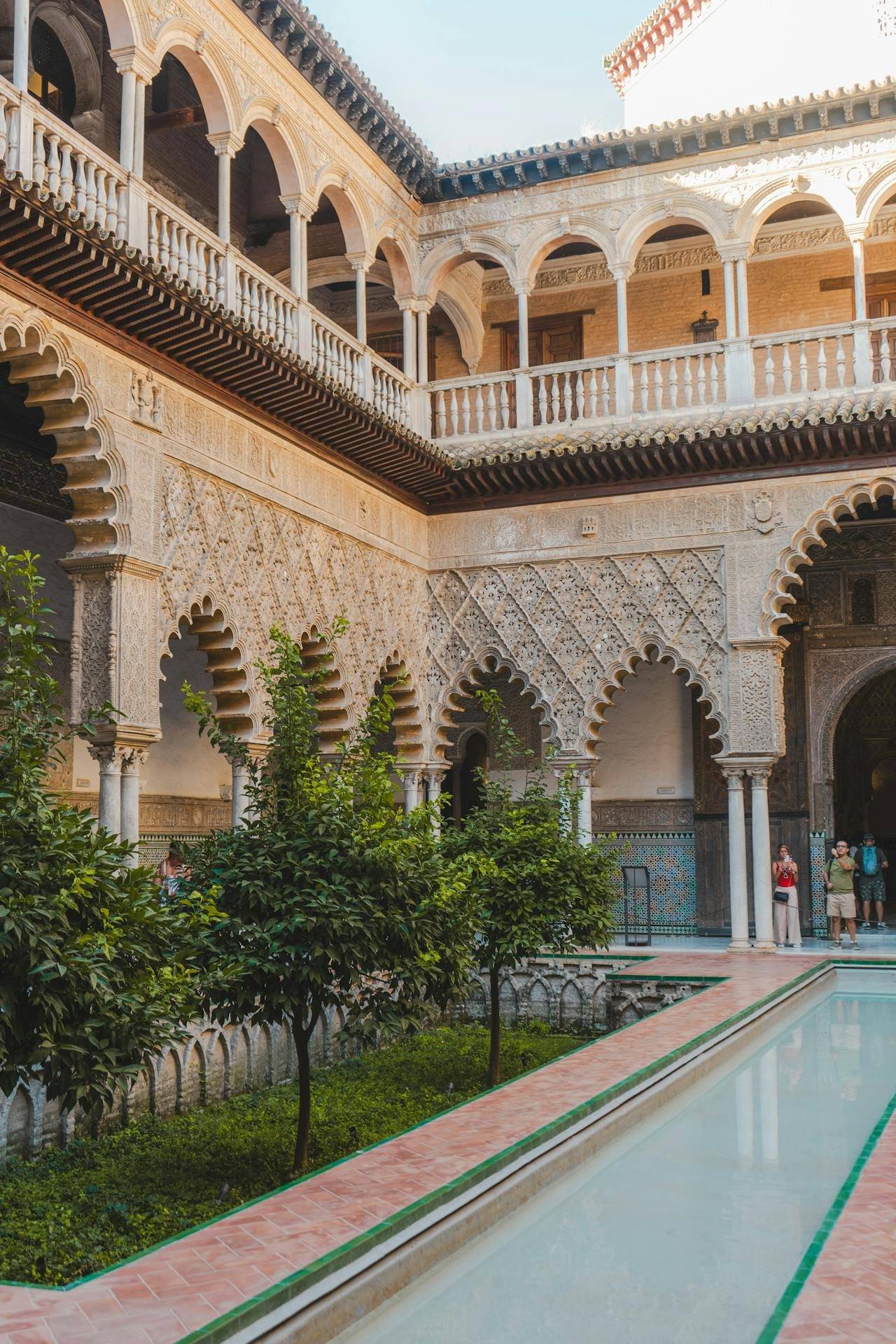
Don Fadrique returns from Italy with 24 pieces of Roman marble sculpture — busts of emperors, senators, muses, and mythological figures — and installs them in the main courtyard arcade. He also commissions Genoese craftsmen to add Renaissance details to the Gothic-Mudéjar shell: marble columns, Italian-style cornices, and a new monumental gateway. This is the moment when Casa de Pilatos becomes architecturally complex rather than merely large.
Work on the main Renaissance staircase is completed. The artesonado (lacquered coffered) ceiling above the stairwell — arguably the finest room in the palace — is installed. The staircase provides access to the upper residential floor for the first time, transforming the palace from a ground-floor courtyard house into a proper two-storey nobleman's residence.
The palace passes to the Dukes of Medinaceli through marriage. The Medinaceli are one of Spain's great noble houses — at their peak, they hold more than 20 titles of nobility. The palace is used as the family's Seville residence and undergoes several periods of decoration and modification. The Flemish tapestries and Dutch oil paintings that still hang in the upper floor rooms date from this period.
The Napoleonic occupation of Seville (1810–1812) damages the palace. French troops use the gardens as a military camp. Parts of the building are requisitioned. The post-Napoleonic period sees decades of gradual restoration, though the palace never fully recovers its 18th-century splendour. Several Roman sculptures are moved for safekeeping and not all are returned.
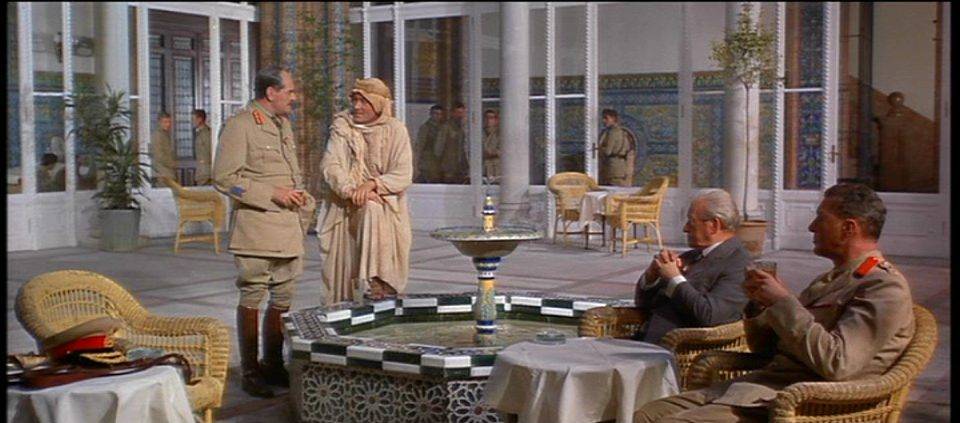
Director David Lean uses the palace's courtyard and arcades as a location for Lawrence of Arabia. The Patio Principal doubles as a Cairo hotel interior. It's the first major international film to recognise the palace's cinematic potential — a tradition continued five decades later by Game of Thrones.
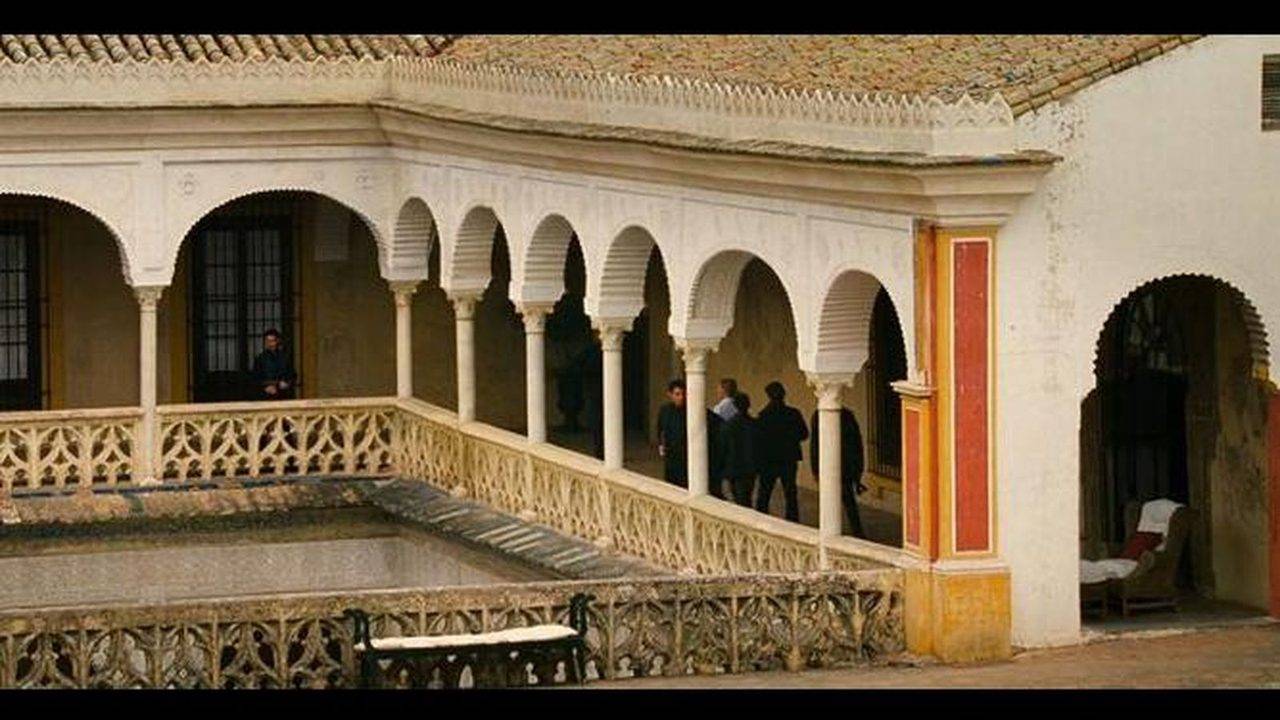
HBO's production team selects Casa de Pilatos as the primary location for the Water Gardens of Dorne for Game of Thrones Season 5. The Jardín Grande (main garden) and the Patio Principal are used for scenes involving the Dornish storyline with Oberyn Martell. The production brings a significant spike in visitor numbers that has continued to grow every year since.
The Fundación Casa de Pilatos, established by the current Duke of Medinaceli, manages the palace as a visitor attraction. The building is continuously maintained and restored. It receives approximately 300,000 visitors per year — substantial, but a fraction of the Alcázar's 1.5 million. The relative obscurity is, for many visitors, the point.
What makes Casa de Pilatos architecturally unusual is not any single style but the way three styles — Mudéjar, Gothic, and Renaissance — occupy the same spaces without apparent contradiction. This is distinctly Sevillian.
Mudéjar refers to the architectural work produced by Muslim craftsmen under Christian rule in medieval Spain. At Casa de Pilatos, Mudéjar is most visible in the tilework (azulejos): the dado panels that line the lower walls of every room and courtyard to a height of 2–3 metres. The tilework was produced in Triana — Seville's tile-making district — and installed in multiple phases from the 1480s to the 1530s.
The geometric interlaced patterns, the calligraphic inscriptions in Arabic, and the colour palette (cobalt blue, white, yellow ochre, copper green) are characteristic Mudéjar. The main courtyard's lower arcade is the richest single concentration of this work in the palace.
The original 1483 structure was late Gothic — pointed arches, ribbed vaulting in the chapel, and stone tracery in the upper-floor windows. Most of the Gothic elements were absorbed into or overlaid by Renaissance additions in the early 16th century. The most clearly Gothic element remaining is the private chapel, which retains its original pointed rib vault alongside the 16th-century Flemish altarpiece.
Don Fadrique's Italian campaign of the 1520s introduced Renaissance detailing that sits over and around the Mudéjar foundation. The marble columns in the main courtyard arcade are from Genoa. The monumental gateway (Puerta de Mármol) on the street is pure Italian Renaissance — two-storey, with Ionic pilasters and a carved frieze. The great staircase ceiling (artesonado) is technically a Mudéjar-Renaissance hybrid, using Islamic geometric patterning in a Renaissance lacquered-wood format.
The result is a building where the same wall might have a Mudéjar tile floor, a Gothic stone arch above, and an Italian marble column beside it. It shouldn't work. In practice it defines the specifically Sevillian character that sets the city's civic architecture apart from Madrid, Toledo, or Granada.
Book your entry ticket or guided tour to Casa de Pilatos — free cancellation up to 24 hours before.